 When it comes to illness, one must first determine whether a disease is actually present or not. There have been cases where doctors, after conducting all necessary tests, report that nothing appears in the results yet elsewhere, a perfectly healthy, active person suddenly falls victim to an illness and finds no relief even through medication. Times have now changed; medical science has acknowledged spiritual science. In ancient times, diseases also existed, but their examination and diagnosis were not carried out through medical instruments rather, through other methods. Today, we may not give traditional medicine (Tibb) as much importance, but upon research, it becomes clear that medical science itself advanced in pharmaceuticals by studying and building upon traditional medicine. Beyond Tibb, the system of Hikmat (Eastern medicine) also contains spiritual methods within it.
History bears witness that where medical science reaches its limits, spiritual methods are often tried, and knowledge from every discipline is utilized in the diagnosis of disease. What I am about to write today serves as guidance for medical doctors, healers, and spiritual practitioners alike. Many physicians and healers contact me for diagnostic insight, so I felt it appropriate to comprehensively address this subject in writing.
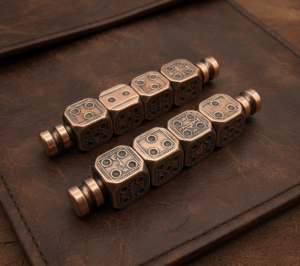 The Science of Ramal (geomancy) is unlike other spiritual sciences. In other disciplines, because we already have prior knowledge of associations and possible answers, we cannot rely on them entirely. In Ramal, however, one does not know which figures will appear. That is its unique quality. Neither the petitioner nor the geomancer knows which geomantic figures the casting will reveal. For this reason, only a few individuals today truly understand this science because from its foundations to its subtleties, mastering it requires prolonged practice. Even after many years of experience, I still consider myself a student, for I wish to remain one. In this way, one learns something new every day. In any discipline, one must first be a student before becoming a master; thus, learning never ceases.
Until a person learns the ABCs of a science, acquiring mastery is impossible. The same applies to this blessed science of Ramal. Its foundation consists of sixteen geomantic figures, which scholars of Ramal have systematically arranged and assigned specific names. This arrangement is called the Da’irah Abdaah (Circle of Abdaah). For more details, one should consult my separate article on the Circle of Abdaah.
It should be noted that there are other circles as well, but the Circle of Abdaah is attributed to Prophet Daniel (peace be upon him), and many geomancers also call it the Dairah-e-Danyaali AS. The science of Ramal has two branches: in one, judgments are made based on the figures themselves; in the other, rulings are derived from the points (نقطہ) of the figures.
These sixteen figures are based on the four elements. Some are masculine, some feminine; some are benefic (fortunate), others malefic (unfortunate). Each figure has its own temperament, direction, bodily association, and linkage to zodiac signs and planets.
From a physical perspective, each bodily humor corresponds to a particular figure. According to medical theory, the human body contains four humors:
-
Blood
-
Phlegm
-
Black bile
-
Yellow bile
These four humors are the root causes of disease.
There are many further details, but to avoid excessive length, we will proceed to the core subject: diagnosis of illness.
In this article, we will understand a few fundamental points:
-
Is the querent truly ill or not?
-
What illness does the patient have?
-
Which system of medicine would be most beneficial?
Now we will address these aspects one by one.
Is the petitioner actually ill?
If the figure in the first house repeats in any of the 6th, 7th, 8th, or 12th houses; or if the figure Aqlah appears in the house of Libra; or if the figure in the 6th house repeats in the 12th—then the patient is genuinely ill. Otherwise, not.
See Chart No. 1
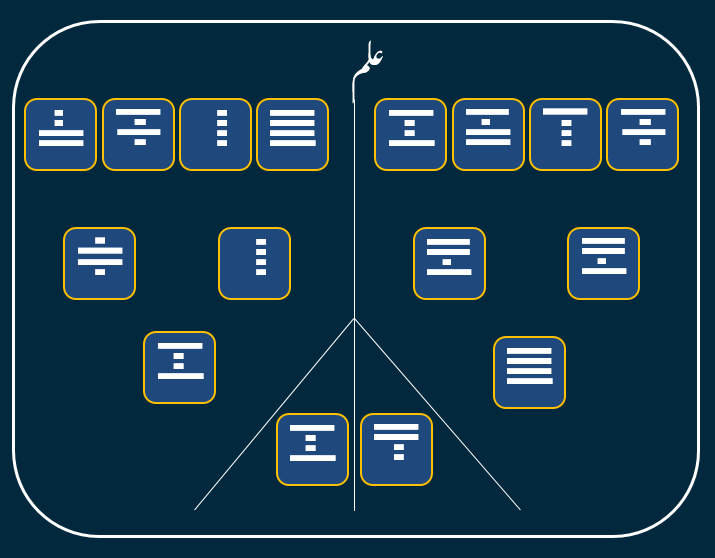
The figure  Qabd al-Dakhil from the first house appears in the seventh house. Thus, it is established that the petitioner himself is ill.
What illness does the patient have?
Look at the chart:
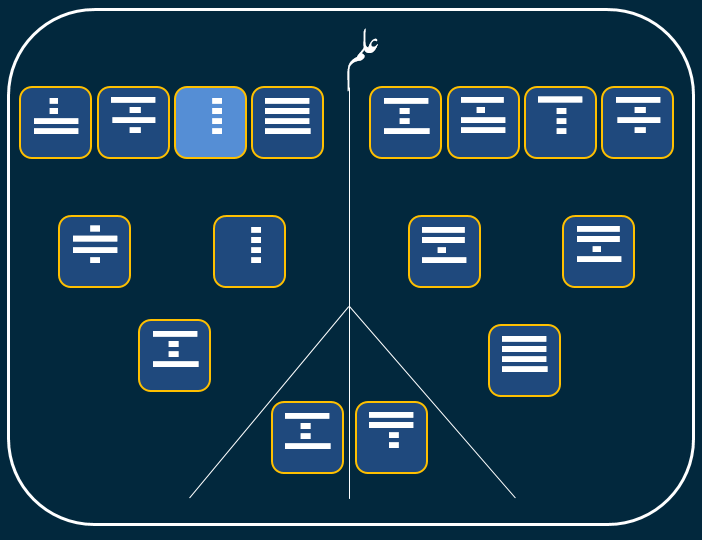
Examine the sixth house. Whatever figure appears there indicates the type of illness associated with it.
In the sixth house appears the figure  Tareeq.
Illnesses associated with Tareeq include:
-
Disorders of the reproductive organs
-
Phlegmatic diseases
-
Epilepsy
-
Sciatica
-
And other related conditions
Which system of medicine will benefit the patient?
In the chart:
-
The sixth house is associated with Unani (Greco-Arabic) medicine.
-
The seventh with Allopathic medicine.
-
The eighth with Homeopathic medicine.
-
The ninth with Biochemic medicine.
Whichever house contains a strong benefic entering figure indicates the most beneficial treatment method.
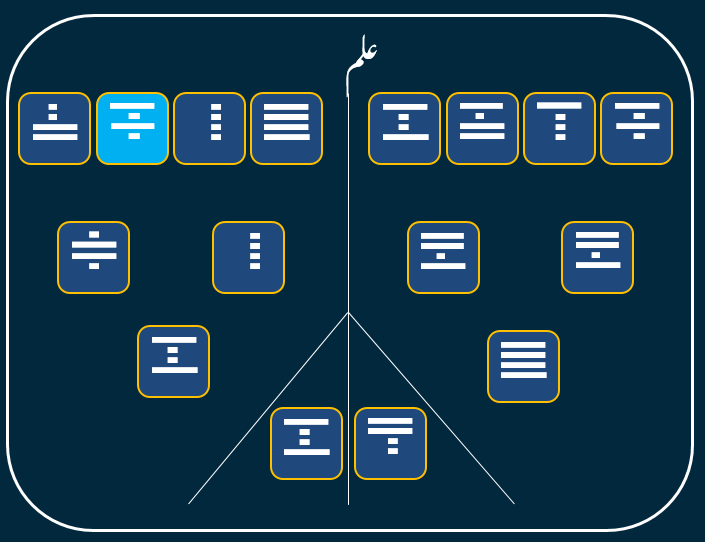
In this chart, the figure in the sixth house is watery but not strong in the airy house. The sixth house corresponds to Unani medicine.
Now look at the seventh house. It contains Qabd al-Dakhil, which is of the earthy element, while the seventh house itself is watery. Since water and earth are harmonious, and the seventh house corresponds to Allopathic treatment, the patient was advised to pursue Allopathic medical care.
An Important Point
In my experience, regardless of which system of medicine a patient follows, Allopathic treatment should always continue alongside it. There are specific reasons behind this, though detailing them here is beyond the present scope.
I have explained the fundamental principles in simple terms. If any point remains unclear, you may contact me for further clarification.